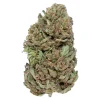
Off Route 101 between San Francisco and Humboldt County sits a sun-grown marijuana farm in Garberville that’s been in operation for more than 40 years. What used to supply the illicit market now grows a legal, medicinal product — and business has never been worse. Johnny Casali, owner of longtime farm Huckleberry Hill Farms, understands that firsthand: he recently fed 55 pounds of his own crop into a wood chipper, a stark illustration of how brutal the legal cannabis industry has become.
“It doesn’t matter how good your product is; there’s so much supply in California that it’s a race to the bottom,” says Casali. While his farm produces over 500 pounds of craft marijuana in his two greenhouse facilities, Casali’s profits are running thin. “It feels like I’m a lettuce farmer right now – I’m working on the smallest of small margins.”
Where Cannabis Regulation Falls Short
Legalization should have been a genuine win for people previously incarcerated over cannabis and for “legacy” operators who’d stayed under the radar until it became legal. It also should have built a legal framework that decriminalized cannabis offenses while funding public business programs for those hurt most by cannabis-related crimes. Instead, lawmakers let their own self-interest steer the market into something unsustainable. Between over-regulation, over-taxation, and rules that swing wildly from state to state, it’s little surprise the cannabis industry now finds itself at a breaking point that feels like an outright failure.
About 95% of all California cannabis cultivators operated at a loss in 2021 according to Jonathan Rubin, CEO of New Leaf Data Services. Since 2017, the wholesale price of pot per pound has plummeted by 52%, making profits nearly impossible for those in the industry.
Legal Weed, Meet Nonexistent Demand
A main cause for these falling prices is due to the increase in supply for legal cannabis, but no increase in legal demand. First, the barriers to entry for creating a cannabis cultivation from permit to product is arguably easier than forming a cannabis dispensary. This problem makes cannabis dispensaries far outnumbered by cultivators. Second, in addition to only 1,000 California dispensaries existing (1 for every 40,000 people), the hurdles to get cultivated cannabis into shops is a highly regulated process. Although obtaining a permit to grow weed is more straightforward than receiving a dispensary license, getting your farmed product onto shelves requires taxes, transportation fees, distribution fees, and product testing, all of which eat away at potential profits set by government regulations. Lastly, since cannabis is still a schedule 1 drug under federal law, major banks are quick to turn away from any business giving off the smallest scent of cannabis in their operations. This forces small cannabis businesses throughout the entire supply chain to face a brick wall of having a secure means of banking, cornering the industry to primarily operate off of cash.
Why Legal Weed Loses to the Black Market
Faced with steep taxes and heavy regulation, California’s cannabis surplus keeps flowing back into the black market as growers try to recover lost profits. The entire premise behind legalization has effectively backfired, pushing the industry back toward the illicit roots it was supposed to replace. California — the country’s largest cannabis market and one of the earliest to legalize — has done little to rein in illegal sales. Investment bank Cowen Inc. found that consumers spent $5.1 billion on legal weed in 2021, against an estimated $15 billion spent on illegal bud. Nationally, that gap holds up: with the legal market worth $25 billion, the black market has sold nearly twice as much.
A Legalization Effort Gone Sideways
The idea of ending illegal transactions, decriminalizing cannabis offenses, and provide economic opportunities for those negatively impacted is now feeling farfetched. With 2021 marking a 25% increase in cannabis related arrests by the Drug Enforcement Agency (mostly of people of color), legalization is currently taking a turn for the worst. Although a majority of Americans support the legalization of recreational and medical cannabis, the outcome is truly unfavorable.
How Taxes Are Choking the Market
The abundance of marijuana suppliers plummeting prices coupled with state and federal taxes eclipsing any other industry has driven consumers and cultivators to the streets. State taxes on cannabis retail sales go as high as 37%, and while the federal government doesn’t allow for the sale of marijuana, pot businesses are unable to take the same business deductions as companies in other markets, leaving them with a combined tax rate of up to 60% or more.
Illinois offers a striking example: cannabis tax revenue there now exceeds what the state collects from liquor. Marijuana generated $467 million in taxes last year, compared to $320 million from liquor. Even as cannabis stock prices have fallen 50 to 70%, tax revenue from cannabis companies keeps setting new records.
Industry Voices on the Struggles of Legalization
In Oakland, California, Amber Senter, CEO of MAKR, has developed a 1,200-square-foot commercial kitchen to manufacture cannabis-infused edibles. Her business is now facing the brink of survival, as state regulations requires her facility to go above and beyond to maintain complete transparency with law enforcement. In all legal cannabis business in California, it is required to have 24 hour live surveillance accessible to officers in every space where marijuana products are being held. This requirement is costly, and is only the tip of the iceberg of regulation expenses. State mandates and fiats also chip away business funds, making Senter believe the industry is near impossible for newly starting businesses to gain any steady ground. “What is legalization doing to small business owners like myself? It’s killing us,” Senter said.
The regulated market has even received criticism from individuals like Steve DeAngelo, dubbed by former San Francisco Mayor Willie Brown as the “father of the legal cannabis industry.” DeAngelo was a driving force behind California Proposition 64 and marijuana legalization. Since opening one of the state’s licensed dispensaries in 2016, DeAngelo’s outlook on the current industry has changed. “We legacy folks, over the course of 50 years, built a market which was fair, which was resilient and which served everybody in the market very well.” He said. “And now we’ve had this hand of government intervention completely disrupt it.”
Not Every Cannabis Brand Is Struggling
Navigating California’s regulatory maze is hard enough on its own, but for a company like Cookies — holding over 51 licenses across multiple states and countries — knowing the law inside and out is what makes the business work. Co-founder Berner has built demand for the brand strategically enough to outrun the economic constraints regulation imposes. At over $60 for an eighth of weed and over $100 for a Cookies hoodie, the premium Cookies’ marijuana and merchandise still sells out in the span of minutes.
What Comes Next for Legal Cannabis
Most if not all industry players are relying on federal legalization to change the tide of downward profits. By decriminalizing cannabis, it would remove the 280E tax penalty on businesses which would allow them to utilize banks and conduct interstate sales.